
Participation of Representatives of the State Electoral Commission of the Republic of Croatia in the Observation of the Parliamentary Elections in Hungary, 10-13 April 2026
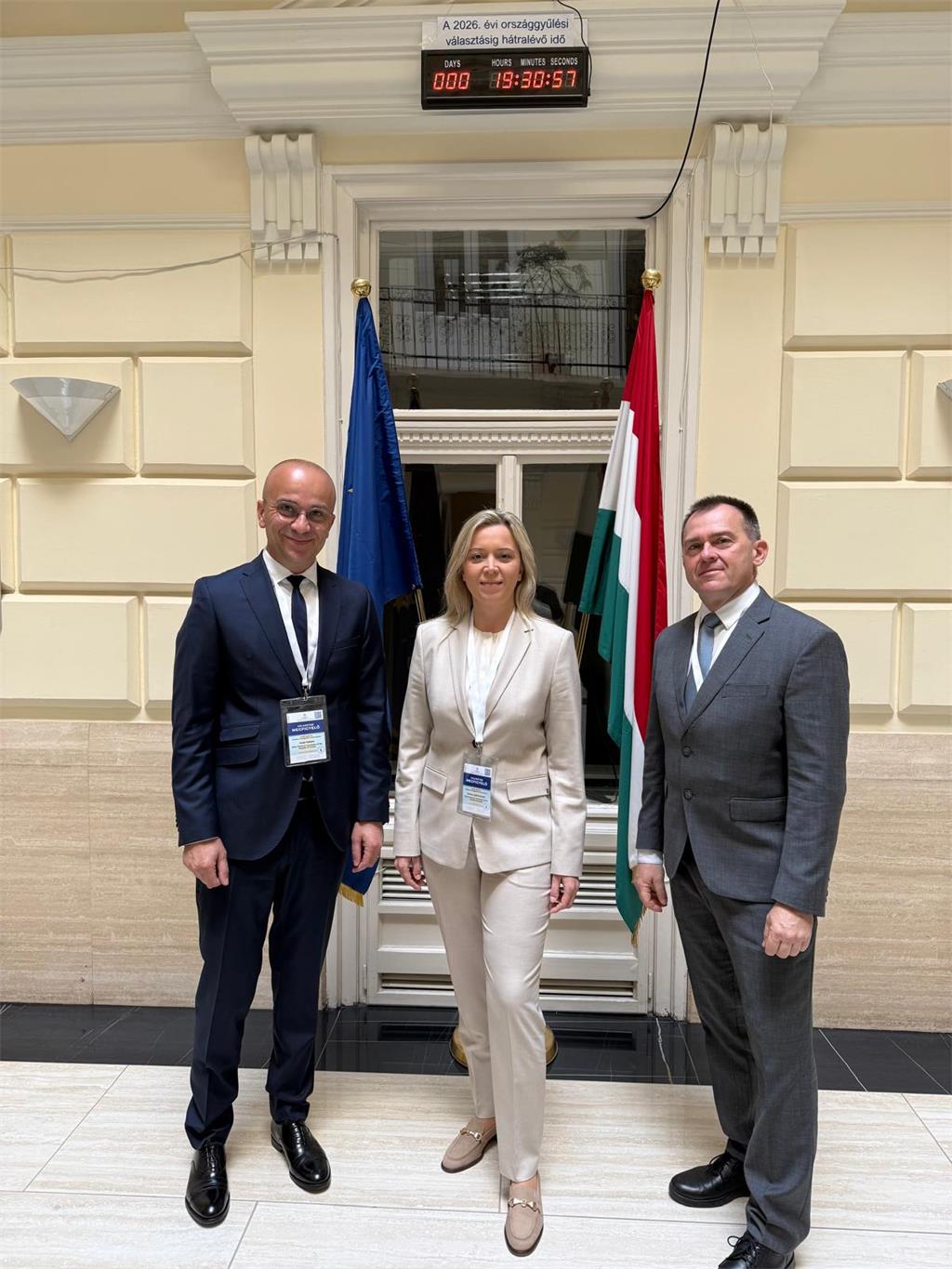
From 10 to 13 April 2026, representatives of the State Electoral Commission of the Republic of Croatia, namely Josip Salapić, Vice-President of the Commission, Ivana Ljulj Cvitanić, Member of the Commission, and Draženko Pandek, Member of the Commission, participated in the observation of the parliamentary elections in Hungary, at the invitation of the National Election Office of Hungary.
As part of the programme of activities for foreign electoral commissions, held from 10 to 12 April 2026, representatives of the Hungarian electoral authorities provided an overview of the electoral rules governing the mixed electoral system, under which 199 Members of Parliament were elected in Hungary: 106 members in single-member constituencies (under the first-past-the-post system) and 93 members from national lists (under the proportional representation system). A total of 8,114,806 voters were registered on the electoral roll and were eligible to vote at 10,047 polling stations, as well as, subject to certain conditions, by post and abroad.
Further expert presentations covered the work of electoral bodies in accordance with their legally prescribed responsibilities; voting procedures; the conduct of polling station committees during voting and vote counting; procedures for the protection of voting rights and decision-making on complaints, with particular emphasis on the digitalisation processes implemented; rules governing political advertising and balanced media coverage, including the supervision thereof; as well as the protection of personal data and access to information.
On the day preceding the elections, the Croatian representatives visited a polling station in Budapest, which also housed a distribution centre. Representatives of the Hungarian electoral commissions, together with the presidents of individual polling station committees, provided detailed explanations of all procedures, covering the complete set of electoral and supplementary materials and voting equipment, with particular emphasis on the handover and delivery process.
On election day, representatives of the State Electoral Commission observed the electoral process at several types of polling stations in Budapest, including regular polling stations and special polling stations where voters registered in other (single-member) constituencies were entitled to cast their ballots. Their observation covered the entire election process, from the opening of polling stations at 6:00 a.m., throughout the voting process, until the closing of polling stations at 7:00 p.m. They subsequently observed the counting and determination of voting results, as well as the publication of the results.
The elections were conducted in an orderly manner and were marked by a high voter turnout of 78.99%. Despite the high turnout, no insurmountable difficulties arose at the polling stations, nor did it have any significant impact on the conduct of the elections.
As part of the programme of activities for foreign electoral commissions, held from 10 to 12 April 2026, representatives of the Hungarian electoral authorities provided an overview of the electoral rules governing the mixed electoral system, under which 199 Members of Parliament were elected in Hungary: 106 members in single-member constituencies (under the first-past-the-post system) and 93 members from national lists (under the proportional representation system). A total of 8,114,806 voters were registered on the electoral roll and were eligible to vote at 10,047 polling stations, as well as, subject to certain conditions, by post and abroad.
Further expert presentations covered the work of electoral bodies in accordance with their legally prescribed responsibilities; voting procedures; the conduct of polling station committees during voting and vote counting; procedures for the protection of voting rights and decision-making on complaints, with particular emphasis on the digitalisation processes implemented; rules governing political advertising and balanced media coverage, including the supervision thereof; as well as the protection of personal data and access to information.
On the day preceding the elections, the Croatian representatives visited a polling station in Budapest, which also housed a distribution centre. Representatives of the Hungarian electoral commissions, together with the presidents of individual polling station committees, provided detailed explanations of all procedures, covering the complete set of electoral and supplementary materials and voting equipment, with particular emphasis on the handover and delivery process.
On election day, representatives of the State Electoral Commission observed the electoral process at several types of polling stations in Budapest, including regular polling stations and special polling stations where voters registered in other (single-member) constituencies were entitled to cast their ballots. Their observation covered the entire election process, from the opening of polling stations at 6:00 a.m., throughout the voting process, until the closing of polling stations at 7:00 p.m. They subsequently observed the counting and determination of voting results, as well as the publication of the results.
The elections were conducted in an orderly manner and were marked by a high voter turnout of 78.99%. Despite the high turnout, no insurmountable difficulties arose at the polling stations, nor did it have any significant impact on the conduct of the elections.